MAPP - Museum of Popular Art of Paraíba
R. Dr. Severino Cruz, Centro, Campina Grande, Paraíba, Brasil
Tuesday to Friday, from 10:00am to 8:00pm - Saturdays and Sundays, from 2:00pm to 8:00pm
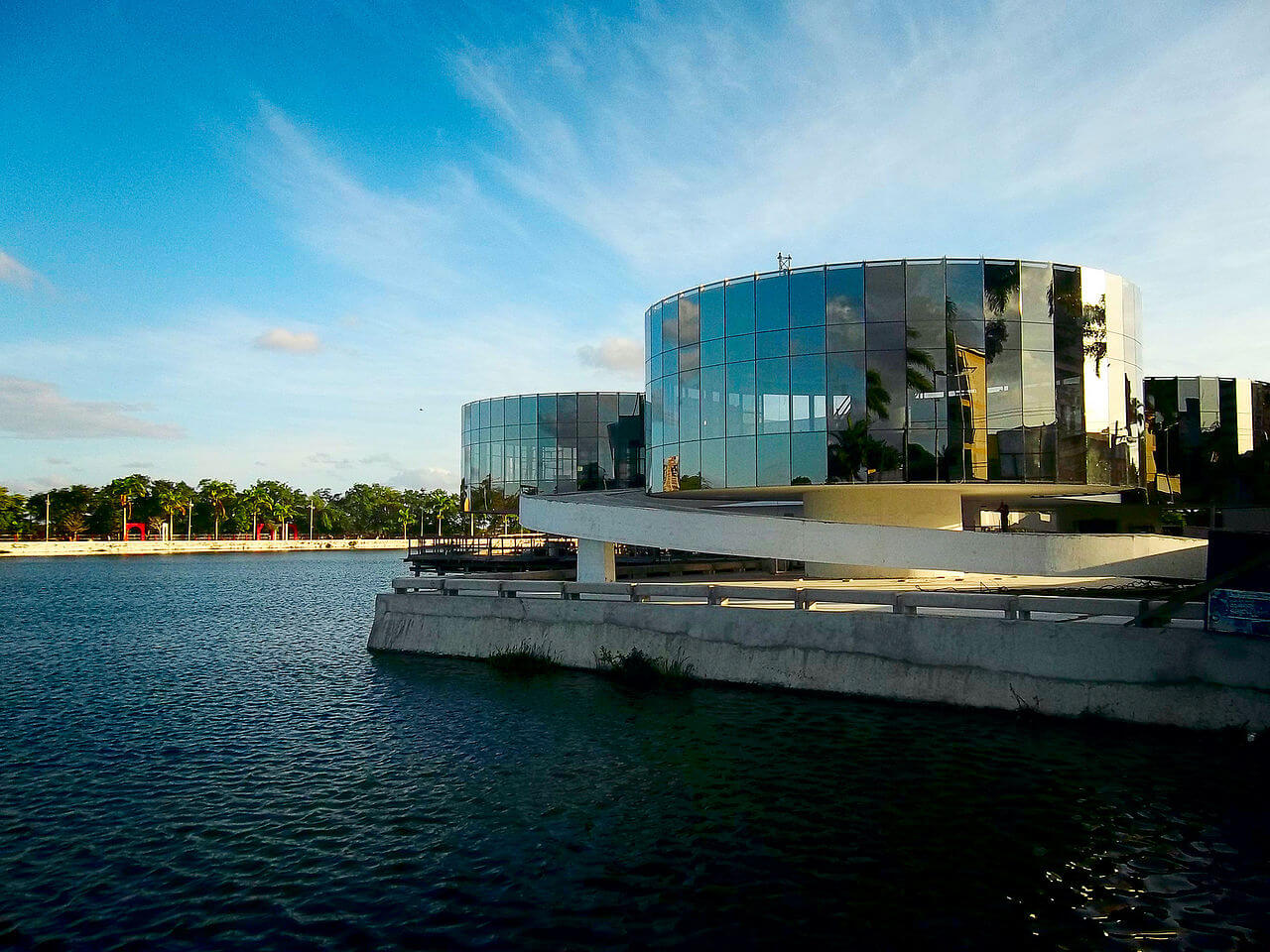
The Museum of Popular Art of Paraíba (MAPP), also known as the Museum of the Three Pandeiros, is located on the shores of the Açude Velho in the Brazilian city of Campina Grande, in the state of Paraíba. Designed by architect Oscar Niemeyer as his final work, the museum is part of the State University of Paraíba (UEPB). It was inaugurated on December 13, 2012. Open to the public since June 10, 2014, the museum showcases the works of the most talented artists from Paraíba, such as Sivuca, Jackson do Pandeiro, Marinês, Elba Ramalho, among others. Each of the three circular structures refers to a specific genre of art.
MAPP is a complex of exhibitions and collection of documentary materials related to music, crafts, singing, cordel literature, and woodcut printing, located in Campina Grande. Its main goals are to create, value, and safeguard the popular culture of Paraíba. The museum was completed in December 2012 through its manager, UEPB. More than just a contemplative space anchored on the banks of Açude Velho, it is also known by the population as the "Museum of the Three Pandeiros" due to its shape, and is configured as a center for the study and documentation of Northeastern culture, especially from Paraíba.
Therefore, the University, which has teaching, research, and extension as its goals, has in the Museum the convergence of these values, through the involvement of professors, students, and the community, with programs that address studies related to various aspects of popular culture. Hence, the decision to extend the actions beyond manual arts, incorporating music and literature, in the different aspects of their material and immaterial economy, presented in exhibitions, publications, courses and meetings, practices, and experiences in a space of beautiful and intriguing architecture that inspires and delights those who visit.
Located on a square, the museum embellishes one edge of the Açude and its architecture was designed in such a way as not to obstruct the view of the water mirror. Composed of three suspended buildings, the lightness of the ensemble highlights its plasticity and functions as a sculpture that can be appreciated from the entire perimeter of the Açude. The glass cylindrical blocks are connected by a platform, and from the various parts of the building, visitors can admire both the city's main postcard and its surroundings, which adds an extra attraction for the visitor.
Source: Wikipedia
Nenhuma exposição encontrada para este espaço.